To Serve or Not to Serve

This post first appeared on the Center for Security Policy Studies blog https://csps.gmu.edu/2020/03/09/to-serve-or-not-to-serve/ on March 9, 2020.

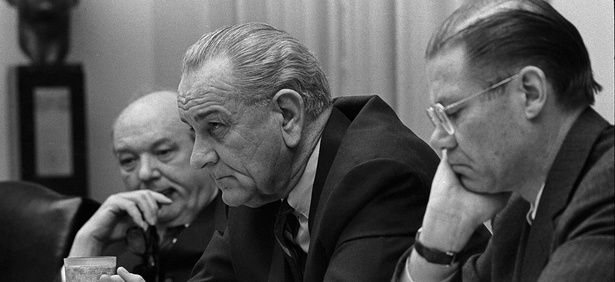
Prospective national security professionals may be forgiven for avoiding the federal government in the current political climate. Watching President Trump, members of Congress, and cable TV personalities impugn the integrity, competence, and patriotism of  national security officials does not paint a picture of a happy, fulfilling career. Disapproval of administration policies, like family separation or the President’s pardoning of accused war criminals, further discourages recruiting. Nevertheless, young people with talent, integrity, and an interest in national security should pursue opportunities to serve.

National security professionals recognized early that President Trump’s approaches to both national security and the federal workforce would pose staffing challenges. Dan Drezner wrote four Washington Post columns on the subject (see here, here, here, and here). Eliot Cohen initially encouraged people to seek positions but to “keep a signed but undated letter of resignation in their desk” to remind themselves of the requirement to identify their ethical redlines and to resign if required to violate them. He quickly reversed himself after deciding the administration would make honorable service impossible. Benjamin Wittes argued senior professional staff  should stay on to ensure high quality professional advice unless ordered to do something unethical.

What has happened in the three years since these questions began circulating?

Nothing good.

The number of applicants taking the Foreign Service exam dropped by 34% in 2017 and a further 22% in 2018. President Trump appointed a high percentage of political supporters to ambassadorships, and Trump-appointed ambassadors are removing their career deputies at an alarming rate. Career prosecutors at the Department of Justice quit the Roger Stone case in response to political pressure, and the Attorney General initiated investigations of the FBI and Hillary Clintonwhile cooperating with the president’s personal attorney, Rudy Giuliani, to produce political dirt on Joe Biden. The president personally attacked career diplomats and military officers who obeyed congressional subpoenas.

This hostile climate is exactly why talented young people of high ideals and integrity should seek careers in national security now and why more senior public servants should encourage them to do so. The most important feature of the U.S. national security apparatus is its non-partisan professionalism, while the most dangerous feature of the current administration is its disregard for the norms of American governance.

The antidote to personalization of the bureaucracy is not abstention or “deep state” resistance. National security professionals can best ensure the continuation of America’s proud tradition of non-partisan service by maintaining high professional standards while remembering Eliot Cohen’s exhortation to identify redlines. National security professionals who value our professional norms should be seeking out talented young people and recruiting them to serve.

Administration hostility is creating vacancies as more senior people choose to depart, giving young staffers opportunities to serve in responsible positions at younger than normal ages. Public service attracts people who value making a difference over personal gain, but that does not mean public servants lack ambition. Rather, their ambitions often focus on achieving good policy outcomes along with personal advancement. The former may be difficult in an administration that does not value professional expertise, but that difficulty can, paradoxically, help young staffers develop greater expertise. To have any chance of making good policy, their proposals will have to be more tightly reasoned and carefully supported than might be the case with friendlier political appointees.

Indeed, serving under a difficult administration may actually have positive side effects. New professionals can build the habit of executing policy dispassionately, at the direction of elected leaders, as well as the courage to explain and advocate policies that may not be popular with superiors. Professional staffers serving inexperienced and erratic decision-makers can unlearn some of the bad habits that their elders adopted, like presenting throwaway courses of action to limit superiors. A national security professional who begins in this environment and endures with her integrity intact is likely to be a formidable policy-maker in the future.

Finally, nobody should ever enter public service without a sense of duty, and duty does not end because the administration is hostile or incompetent. If anything, weak political appointees increase the duty of competent public servants to do their best within their ethical boundaries. Anyone hoping to have a career in national security should understand that she will have to serve in administrations with which she disagrees and under leaders of whom she disapproves. A young graduate entering public service in 1980 during the Carter administration and serving 40 years would have also served under Presidents Reagan, GHW Bush, Clinton, GW Bush, Obama, and Trump. Secretaries of State would have ranged from Al Haig to Madeline Albright. Given that broad diversity, any public servant could expect to disagree with some or even many of the people she would have to serve and policies she would have to implement. New staffers, however, have more to gain and less to lose in the current environment. Even with accelerated responsibility they will be farther from the political appointees than their more senior colleagues. Signing that letter of resignation in the desk drawer will cost them less than a mid-grade staffer who is halfway to retirement.

People who value rational, evidence-based, morally defensible national security policy can either enter the arena with their eyes open, or they can cede those entry level positions to people of lesser qualifications and greater ethical flexibility. Today is the perfect time to join, knowing that it may be a trial by fire.

The Cost of Service in a Partisan Age

This post appeared originally at the Center for Security Policy Studies blog https://csps.gmu.edu/2019/11/09/the-cost-of-service-in-a-partisan-age/ on November 9, 2019

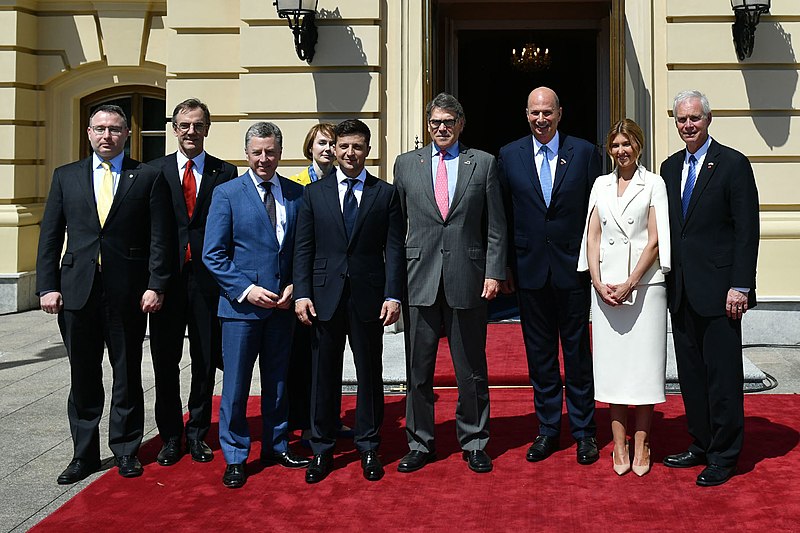
Delegation (left to right): Alexander Vindman, Joseph Pennington, Kurt Volker, Olena Serkal, Volodymyr Zelensky, Rick Perry, Gordon Sondland, Olena Selenska (First Lady), Ron Johnson at Zelensky’s Presidential Inauguration, 2019
Photo from Wikimedia Commons

The Trump administration has challenged American norms of civil-military relations. Candidate Trump signaled that he would reverse established law and attack commonly held norms when he promised to reauthorize waterboarding, and he further challenged tradition by appointing an unusual number of serving and retired generals to senior positions and referring to them as “my generals.” In this hyper-partisan environment, the military has struggled to maintain a non-partisan position. Maintaining it became unexpectedly harder last week when a serving military officer, LTC Alexander Vindman, was drawn into the impeachment inquiry, and the president subsequently attacked him personally.

Faced with this challenge, the military’s priority is to remain outside the partisan fray and maintain its position as a trusted national institution. Political actors, including the president, are attempting to use the military’s prestige to bolster their positions. This prestige, however, rests on the tradition of non-partisanship.

Decisions about when and how to go to war are inherently political because they have political consequences, but the military has traditionally provided advice on matters with political implications while scrupulously avoiding any participation, even indirectly, in the partisan contestation of elections. In a time when every question is contested on a partisan basis, every answer becomes partisan. The military must tread an extremely narrow path to fulfill its obligations without straying any further than necessary into partisan conflict.

Testifying truthfully before Congress should not be a partisan issue, but there is no way to avoid appearing partisan in modern politics. Refusing to testify is perceived as partisan by the one party; agreeing to testify is perceived as partisan by the other. Assertions that LTC Vindman could be court-martialed for testifying are far-fetched, but he has been vilified in the conservative media and will likely retire at his current grade despite his stellar credentials.

LTC Vindman’s situation presents a dilemma for military leaders attempting to sustain non-partisan norms. So far, senior military leaders have neither criticized nor defended Vindman. There are no grounds for criticizing him, but to defend him would place the military establishment in direct conflict with the president and create the appearance that the military is taking a side in the impeachment debate. For military leaders, the priority should remain protecting the military’s non-partisan legitimacy. This may, unfortunately, include tolerating unfair treatment of one of their own. Up to a point, the institutional legitimacy of the military is more important than the mistreatment of one individual.

Opponents of the president may be tempted to make Vindman into a heroic symbol of resistance. They would be wise to resist the temptation. Conservative adulation of Lt. Col. Oliver North after he testified to Congress regarding the Iran Contra Affair in 1987 reinforced the growing perception at the time that the military was closely aligned with the Republican Party, which subsequently undermined the military’s credibility and prestige. [1] 

The real test will come if the president and his supporters continue to attack Vindman publicly or attempt to take legal action against him. Retiring as a lieutenant colonel may be unfair, but it is a small price to pay for defending the norms of civil-military relations. If Vindman testifies in open hearings, the president and his supporters are likely to engage in public character assassination in order to undermine his testimony. The president has already shown his willingness to intervene directly in military legal proceedings.

Military leaders can be excused for accepting some costs to Vindman in exchange for protecting the military institution, but they cannot allow him to be prosecuted or maligned publicly by the president in a way that could make him a target. If the president pursues his standard playbook of innuendo and harassment, he will place military leaders in a lose-lose situation – either publicly contradict the president in a highly-charged partisan matter or publicly abandon an officer to be persecuted for his honorable service. The president should understand that unfounded public attacks risk reluctant repudiation by his senior military leaders, and those leaders should privately signal their willingness to do so before it becomes a public spectacle.

Senior uniformed and civilian military leaders must prioritize the military’s non-partisan integrity in a highly partisan environment, but they must realize that they risk the same dilemma as LTC Vindman. Whether he chose to testify or not, his actions were bound to be seen as partisan. Now, military leaders will face the same problem if the president forces them to choose between defending Vindman or abandoning him. The president and his supporters will view the former as partisan resistance, and Democrats will view the latter as partisan acquiescence. The president should avoid creating that dilemma, and military leaders should let him know now, before it again bursts into public view, that they too will speak truthfully and publicly if forced.

[1] Peter Feaver and Richard H. Kohn, Soldiers and Civilians: The Civil-Military Gap and American National Security (MIT Press, 2001).

Islamic State and the Sahwa

I cannot recommend too highly Dr. Craig Whiteside’s ICCT research paper, “Nine Bullets for the Traitors, One for the Enemy: The Slogans and Strategy behind the Islamic State’s Campaign to Defeat the Sunni Awakening (2006 – 2017).” For those of us who fought the war against the various incarnations of Daesh from 2003-2010, it is eye-opening to see what we did not see at the time. I personally operated in a senior targeting position with the main-effort U.S. division in Baghdad during the height of this fight, and much of what Dr. Whiteside details was unknown to me. It should not have been. We did a poor job of monitoring our enemies’ information operations and too often saw the fight in purely tactical terms–cut off the head to kill the snake. Among his other interesting ideas, Dr. Whiteside makes a plausible argument that Abu Musab al Zarqawi was uniquely unsuited to deal with the Sahwa movement, implying that his death in 2006 may have been a gift to the enemy. This dynamic played out on the Shi’a side in 2008 when we failed to kill both Arkan al Hasnawi in Sadr City and Abu Sajjad in al Rashid. Both men attempted to run their organizations from exile, creating significant opportunities and preventing the rise of more effective local leaders.

In the conclusion, Dr. Whiteside explicitly ties the resurgence of the Islamic State following the Sahwa movement to its “defeated” status now. He makes a cogent argument that recent setbacks should not be assumed to mean complete and enduring defeat. Clearly, this question is critical in light of the President’s decision to withdraw all U.S. forces from Syria.

The implication need not be that we must retain U.S. forces indefinitely. Indeed, if U.S. boots on the ground are the only way to sustain a victory over enemies like Daesh, than that would tend to argue strongly against engaging in military action in the first place. The U.S. cannot sustain a decisive ground presence forever in every place it may want to fight.

It does imply that a precipitous withdrawal without a deep understanding of the current dynamics and a strong plan to sustain gains through allies will almost certainly lead to at least a local disaster. Before U.S. forces withdraw, we should be completely clear about the strengths, weaknesses, and likely future course of Daesh, and we should determine the ways and means required to continue the momentum toward their eventual destruction as an organizing force. Such an approach, with the close cooperation of our Iraqi partners, the Kurds, and the leaders of any Syrian groups required, along with clear commitments to provide those resources going forward might go a long ways towards mitigating the understandable sense of abandonment among those who have fought alongside us, in some cases for decades.

Casual Lies and the Military Profession

The Wall Street Journal published an account of American soldiers fighting in Russia (paywalled) at the end of World War I to commemorate the centenary of the armistice. Leaders were unable to explain to the soldiers why they were in Archangel fighting Bolsheviks when they had been drafted to fight Germans. Things became even more tense once the Germans surrendered and supplies ran short just in time for the Russian winter.

Initially commanders did what commanders do–they assured their higher headquarters that all was going well and morale was high. It wasn’t and it wasn’t. Eventually the senior officers had to acknowledge that troops were on the verge of mutiny.

Looking back at the Polar Bear Expedition in light of yesterday’s dog and pony show on the Mexican border highlights an age old problem for militaries, one we would do well to fix. The first officer to tell his masters, uniformed and civilian, that things are going badly will almost certainly be first ignored, then relieved, and finally besmirched. Only when word gets back to the home front and politicians face angry families, or when military disaster becomes undeniable, will senior officers drop their insistence on optimism and positive news.

The WSJ story makes it clear that is what happened in Archangel. I recently rewatched A Bridge Too Far, in which the intelligence officer who predicted disaster was cashiered before the operation. Phil Klay published a brilliant reflection on his own Iraq service in America on Veterans Day that recounted the disgrace of the PSOD (read it for yourself–it is well worth the time). Finally, yesterday, we got to witness commanders on the ground assuring the Secretary of Defense, himself a distinguished combat commander, that soldiers laying wire along the Mexican border to defend the mightiest nation on earth against a few thousand tired migrants were both deriving great training value and maintaining sky-high morale. As usual, the soldiers themselves were not having it, and we are left with the uncomfortable acknowledgement that field commanders are more likely to say what their bosses want to hear than to tell the truth. That military professionals just accept this practice as a necessity of promotion (and I do not exempt myself from this criticism) says nothing very good about the military profession in America in 2018.

American soldiers are not Roman centurions and they are not the French Foreign Legion. The citizen soldiers of a democracy deserve better. Our society lavishes praise on the “heroes” who lead our military, but we collectively are not worthy of such praise if we can breezily lie when it suits us. Leonard Wong and Stephen J. Gerras identified the problem in a well-regarded paper, but senior leaders have not made fixing it a priority. We should not be surprised–everyone in a position of authority rose through the system in which casual and obvious dishonesty was required. It would be surprising if they turned on a culture that has rewarded them so greatly. The tragedy is that these are not evil men and women. In my experience, most of them are scrupulously honest in their daily lives. They do not lie to their spouses. They would not cheat on their taxes or steal a candy bar. The military has placed certain areas outside the bounds of normal rules for honesty.

We have developed a leadership culture that views positivity and optimism as fundamental characteristics of leaders, and to some extent they are. Nobody will follow a sad-sack. The danger is that it is far too easy to conflate optimism with happy talk. Telling superiors that morale is good when it is clearly not is not optimism or positive leadership–it is lying. The mutineers of Archangel showed where it leads. Secretary Mattis should never have asked a commander on camera how morale was–answering with anything short of “excellent” would have been career suicide. In asking the question, the Secretary was essentially soliciting a lie for public and presidential consumption on national television. In doing so, he signalled every uniformed leader that such casual dishonesty was not only acceptable but expected.

I should point out here that I am not assuming that morale is bad. Perhaps it is great, although I doubt it. The point, rather, is that the colonel’s answer moves us no closer to knowing the state of morale at Camp Donna than we were before the Secretary asked the question. If we ask ourselves the simple question, how would the colonel’s answer have differed if morale were good or bad, we recognize the problem. The U.S. military has been fortunate not to face an existential threat since about 1944. Since the turning points of World War II, we have faced some terrible combat at places like Chosin and Khe Sanh and Falluja, but no military leader (outside a few watch officers at NORAD) has faced a decision on which the fate of his nation hangs. Officers have been free to answer with their careers in the forefronts of their minds, knowing that the immense national power of the United States would mitigate any negative consequences. Even when troops rebelled, as they did in Archangel and on occasion in Vietnam, the consequences were unlikely to be disastrous.

Only a culture of radical honesty, fostered from the top, will overcome the cost-benefit analysis that leads officers to tell “little white lies” that in the aggregate are neither little nor harmless. When I was a young captain, my battalion commander used to say, “don’t [urinate] on my back and tell me it’s raining.” When military senior leaders start responding that way to obvious happy talk from ambitious colonels, we’ll be on the right path.

Insanity = Expecting Different Results


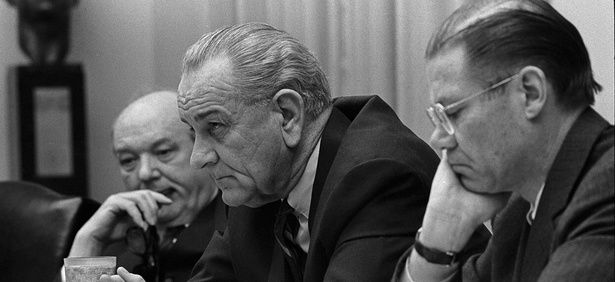
LBJ_McN“Bureaucracy Does Its Thing: Institutional Constraints on U.S.-GVN Performance in Vietnam.” by R.W. Komer. Rand Corporation, August, 1972. https://www.rand.org/content/dam/rand/pubs/reports/2005/R967.pdf

Readers who have served in Iraq or Afghanistan, but particularly Iraq, would be wise to lay in a stock of their favorite adult beverage before diving into Robert Komer’s first-hand study of institutional inertia in the Vietnam War. In his final chapter, Komer makes the accurate and vital point that the past does not provide a foolproof template for the future. That said, the past often provides a far better sense of what will not work that what will. Iraq veterans are likely to respond to Komer’s study with a fair degree of rage.

Known as “Blowtorch Bob” for his direct, unfiltered manner, Robert Komer served in Vietnam from 1967 to 1968 as head of the Civil Operations Revolutionary Development Support (CORDS) program. Having served on the National Security Council before Vietnam, including a stint as interim National Security Adviser to President Johnson, he was appointed Ambassador to Turkey in 1968. Though his in-country tenure was brief, it covered a critical period in the Vietnam War and followed years of direct involvement in Vietnam policy in Washington. Although CORDS was responsible for the “hearts and minds” campaign, Komer was no soft-hearted do-gooder. CORDS had both military and civilian staff, fell under Military Assistance Command – Vietnam, and was responsible for over 20,000 deaths through the Phoenix program of targeted assassinations.

In 1971, the Advanced Research Projects Agency, through the Rand Corporation, commissioned Komer to write a study of the ways institutional constraints and characteristics affected U.S. and Vietnamese prosecution of the Vietnam War. Komer’s overwhelmingly caustic and pessimistic assessment is even more remarkable for having been written three years before the final collapse of the South Vietnamese government. Nobody reading this study in 1972 should have been the least bit surprised when North Vietnamese tanks rolled into Saigon.

Komer made four observations that should give pause to anyone advocating for direct U.S. involvement in a civil war or insurgency in a distant country with an alien culture.

  1. “[T]o a greater extent than is often realized, we recognized the nature of the operational problems we confronted in Vietnam, and…our policy was designed to overcome them.” (v)
  2. Official U.S. policy directed a counterinsurgency response that never fully materialized on the ground; both U.S. and Vietnamese military leaders employed conventional military tactics regardless of policy guidance.
  3. “[The U.S.] did not use vigorously the leverage over the Vietnamese leaders that our contributions gave us. We became their prisoners rather than they ours; The [Government of Vietnam] used its weakness far more effectively as leverage on us than we used our strength to lever it.” (vi)
  4. The various agencies operating in Vietnam, regardless of the circumstances and guidance, performed their “institutional repertoires” with disastrous results.

Along the way Komer provides important insights into the questions of organization, civil v. military authority, and other tactical and procedural issues that played a role in the final outcome.

In the years since the end of the Vietnam War, a common picture has emerged of falsified or rose-colored reporting, inappropriate metrics (i.e. body counts), and relentless, unjustified optimism on the part of military leaders in Saigon. Komer strongly challenges that picture. While there are any number of examples of false or misleading reporting, and while the public benchmarks for success were unquestionably inappropriate, Komer makes a compelling forest/trees argument predicated largely on the record in The Pentagon Papers. Sure, battalion and brigade commanders may have inflated their body counts and pencil-whipped reports on “pacification,” but Komer argues that policy makers in Washington were well aware of the deteriorating situation in Vietnam, and that they recognized the causes of that situation. No matter how many fake trees may have been reported, the White House knew the forest was on fire.

Aside from accentuating the positive, official reporting tends to suffer from an obsession with quantification. Consequently, the government privileges indicators that can be quantified without regard to their relevance. In campaigns like Vietnam and Iraq, where there is no clear enemy order of battle, information that can be counted is often meaningless, and the most important information is often subjective, intuitive, and constantly shifting. When public support is the key to success, effective polling is the obvious measure of choice. Unfortunately, effective polling relies on a whole suite of conditions that do not exist in a war zone–accurate census data and security for pollsters first and foremost.

The situation is further aggravated when the metrics change constantly. Following the Vietnam War, the U.S. military reached the obvious conclusion that individual replacement every twelve months shattered unit cohesion, deprived the force of institutional knowledge, and created vulnerabilities. Unfortunately, DoD was unwilling, or politically unable, to come to grips with the implications of those observations. While the military eliminated individual rotations, it simply replaced them with unit rotations, thereby improving the unit cohesion problem at the expense of making the institutional knowledge problem even worse. At least under individual replacement, only about 1/12 of the force rotated in a given month. Under unit replacement, nearly all institutional knowledge would depart a given operational area within a week.

The rotation of units, combined with the careerist pressures of the military, caused each incoming unit in Iraq to select a largely new set of metrics to assess progress. Incoming units established new metrics, determined that their predecessors had left a mess, then spent 12 (or later 15) months working to improve the new metrics, at which point they rotated out and the cycle repeated. Ironically, this cycle of mismeaurement and misinformation did not require unethical or inaccurate reporting by anyone. Incoming units really did find a mess because the situation was generally deteriorating. They not unreasonably determined that their predecessors were both failing to improve the situation and measuring the wrong indicators. In setting new indicators, incoming units were careful to select factors that they could both affect and measure, knowing that failure to accomplish their goals would be career-ending for their commanders. Units were therefore able to improve their metrics while the situation around them worsened.

Komer’s articulation of similar dynamics in Vietnam over three decades earlier raises the obvious question, and accusation, why did we not learn? Why did we repeat the errors of our fathers?

This brings us to the central premise of Komer’s study and his most valuable insight. Large, bureaucratic organizations do what they are organized, resourced, and trained to do. They are generally very good at dealing with clearly defined, recurring problems. They are not good at adapting to new, poorly defined problems. Even when the characteristics of a new problem become clear and the solution is visible, existing organizations will not adapt unless shaken by a disaster and threatened with destruction–sometimes not even then.

To understand the military’s failure to adapt in Vietnam it is essential to bear in mind both its antecedents and its contemporaries. The generals who led in Vietnam mostly began their careers in World War II, a conflict of firepower, linear tactics, and large-unit engagements. They followed World War II with Korea, where effective conventional tactics eventually worked to achieve a stalemate that favored the U.S. and its South Korean allies. The highly superficial commonalities between Korea and Vietnam–wars against Asian Communists from northern rump states–caused U.S. military leaders to make a category error. Meanwhile, the war in Vietnam was never the main show for the U.S. military. Throughout the conflict, the U.S. military’s primary role remained deterrence of the Soviet Union, necessitating highly conventional force design, training, equipping, and doctrine.

This is the point that Komer drives home again and again. Bureaucracies “perform their institutional repertoires” and the institutional repertoire of the U.S. military, particularly the U.S. Army, was big unit wars against conventional enemies.

Komer’s study focuses primarily on the U.S. bureaucracy and the Vietnamese bureaucracy through the lens of its interaction with the American, and he clearly believes at a very basic level that better performance would have resulted in better outcomes. Nevertheless, he acknowledges the possibility that the problem was unsolvable and articulates the fundamental dilemma of great power counterinsurgency over and over.

The GVN’s performance was even more constrained by its built-in limitations than that of the U.S. In the last analysis, perhaps the most important single reason why the U.S. achieved so little for so long in Vietnam was that it could not sufficiently revamp, or adequately substitute for, a South Vietnamese leadership, administration, and armed forces inadequate to the task. The sheer incapacity of the regimes we backed, which largely frittered away the enormous resources we gave them, may well have been the greatest single constraint on our ability to achieve the aims we set ourselves at acceptable cost. (vi)

Quite simply, if the local government were not a complete mess, it would not need great power intervention in the first place. There is a disparity of motivation between the great power and the insurgent, but there is an equally large disparity between the great power and the supported government. A “victory” that requires the ruling class to surrender its power, wealth, or ideology is not a victory in their eyes, but civil wars and insurgencies rarely gain traction in societies with equitable distribution and representation.

Veterans of Iraq and Afghanistan will see clear shades of Baghdad and Kabul in Komer’s assessment of the GVN. Indeed, T.E. Lawrence’s 15th article points to his understanding of both the inherent problem and the difficulty, for effective soldiers, in overcoming it:

Do not try to do too much with your own hands. Better the Arabs do it tolerably than that you do it perfectly. It is their war, and you are to help them, not to win it for them. Actually, also, under the very odd conditions of Arabia, your practical work will not be as good as, perhaps, you think it is. (http://www.pbs.org/lawrenceofarabia/revolt/warfare4.html)

Lawrence was uncharacteristically humble in circumscribing his advice to the culture he knew well, but the same basic dynamic was at work in Indochina. The frustration of watching poor or corrupt performance is simply too much for the average western military professional, and yet poor and corrupt performance will be the standard in any nation requiring outside assistance. It is a paradox understood by experienced counterinsurgents (and parents of teenagers) that providing less assistance can engender better performance. Komer points out that President Johnson’s limitations on troops and bombing following the “Tet shock” forced “the GVN and ARVN at long last to take such measures as manpower mobilization and purging of poor commanders and officials. After Tet 1968, GVN performance improved significantly” (142). Komer’s observation of bureaucratic behavior and limitations combined with the paradoxical realities of counterinsurgency pose a cautionary tale for anyone contemplating intervention.

The U.S. military of 1965 (or 2001) was an enormous organization, run through almost comical levels of bureaucracy by necessity. There is simply no other known method of organizing and operating a worldwide organization requiring millions of people and billions of dollars. Contrary to the mythology of Hollywood and Washington, DC, bureaucracies are not made up of or run by mindless drones, imagining new forms to require so they can be left in peace to enjoy their donuts and cigarette breaks. Bureaucratic leaders tend to be thorough, energetic, optimistic, and ambitious, and they are generally highly reliant on rules and order. They advance by closely following established procedures and avoiding embarrassment. When intervening in a civil war or insurgency, we place such leaders in a chaotic situation in which they have little control over actions or outcomes and are surrounded by people whom they see as incompetent, corrupt, and deceitful. Because their careers depend upon providing measurable results and avoiding embarrassing failures, they have strong incentives to gain control of the immediate tactical situation and to emphasize areas in which they can control the variables. In other words, they are exactly the wrong people to operate in the roundabout, oblique manner that Lawrence recommended.

The problem is aggravated by the mismatch between rhetoric and reality. During the Vietnam War, the U.S. government claimed that maintaining a friendly South Vietnam was a vital U.S. national security interest, but it never acted in a way that supported that claim. In both the Civil War and World War II, the U.S. Army enacted tectonic shifts in its manner of operations, admittedly facing resistance at every turn, because the unprecedented threats provided the impetus to overcome bureaucratic inertia. The Army’s approach to Vietnam (and Iraq and Afghanistan) demonstrated that its leaders did not believe their own dire assessments of the war’s importance. The Army failed to alter assignment policies or organization in ways that would have materially improved its efforts, even when those changes were identified. Moreover, the Army’s inertia may have been a rational response to the situation. The U.S. faced the Soviet Union in a peer competition that threatened the destruction of human civilization, while the 1975 collapse of the South Vietnamese regime with almost no significant consequences for the United States proved that the threat there had been badly overblown. Organizing to fight a conventional, mechanized war against regular units was precisely what the United States should have been doing in the 1960s.

Recent work by Walter C. Ladwig, III (“Influencing Clients in Counterinsurgency: U.S. Involvement in El Salvador’s Civil War, 1979–92,” International Security, Volume 41, Number 1, Summer 2016, pp. 99-146) raises the possibility of alternative approaches that do not rely so heavily on the adaptability of rigid military bureaucracies and do not commit U.S. prestige so decisively. Inherent in the more indirect approach, however, is the willingness to fail. While “failure is not an option” is rarely actually spoken in the military, the phrase “we don’t plan for failure” is common. Planning for or accepting the possibility of failure is anathema to the successful military officer in the same way that standing by and watching local partners accept bribes or perform incompetently is. However, the willingness to fail is a basic necessity for U.S. intervention in wars of choice if we do not wish to keep repeating the mistakes of Indochina, Afghanistan, and Iraq.

Once we accept the premise that the outcomes in places like Vietnam and Iraq can be desirable without being essential, we can correct the category error that has led us to excessive, but ultimately failed, full-scale military intervention. A civil war in a strategically useful but not essential country on the far side of the world may be a war for the people who live there without being a war for the United States. That is not to say there will not be violence or U.S. casualties–both occur often without being deemed a war–but they will not require mobilization of the nation or national commitments of prestige to the point that the U.S. cannot accept failure. Rather than view them as wars, U.S. decision makers can view them as investments, and just as with an investment they can define what risk they are willing to take and build an alternative plan for failure.

Komer describes the failures of the various command structures throughout the Vietnam conflict. Despite the recognition that the conflict was primarily political, the military always ended up in charge because it provided the bulk of the resources. Ambassador Henry Cabot Lodge was allergic to managing, and Ambassador Maxwell Taylor, who seemed to be the perfect “civilian” to merge the various efforts and subordinate the military, instead deferred to the generals and the military command structure from which he had sprung. In his conclusion, Komer argues that ad hoc organizations may be superior to repurposing existing organizations because they will not be so wedded to “institutional repertoires.” He maintains that such ad hoc organizations were generally effective in Vietnam, but it is worth noting that the Coalition Provisional Authority that nominally ran the early campaign in Iraq was a conspicuous failure. Theory and common sense would tell us that a strong ambassador is the right person to head such an effort, but history gives us reason for caution. This dynamic might be more functional in an environment with less military presence–the overwhelming resource disparity lends power to the military chain of command that civilian agencies find hard to overcome. A more indirect approach might reduce that inequality by lowering the requirement for and value of military contributions.

Regardless of the command structure, it is essential to identify measures of both performance and effectiveness, determine the indicators and resource collection, and then follow the evidence to legitimate, no matter how unwelcome, conclusions. Komer devotes extensive space to assessing the assessments and reaches the conclusion that an external review is a necessity. In Vietnam the Office of the Secretary of Defense (OSD) conducted, in Komer’s view, excellent analysis, but the Joint Chiefs of Staff formally objected, twice, to OSD analyzing military performance in the field. In Vietnam, MACV consistently analyzed the wrong data because their theory of the war was wrong. In line with fighting a conventional war, they developed conventional order of battle metrics that failed to capture meaningful information. This is one lesson the U.S. military learned between 1975 and 2003 but did not follow to an effective solution. In Iraq, U.S. forces attempted to measure factors they associated with counterinsurgency, but DoD and the theater commanders never agreed on a standardized set of metrics, and they never resourced collection of the most relevant, and difficult to collect, data regarding public opinion. Consequently, incoming units frequently designed new metrics and started from new baselines, providing a hodgepodge of data covering 12, 15, and 9-month increments but useless for long-term comparisons.

While the ideal command arrangement is open to debate, the need for external, objective analysis is clear. In future, an honest broker, unbeholden to the chain of command, must collect and analyze relevant data across the entire duration of U.S. involvement in any conflict. Such an organization must be resourced to collect the necessary data regardless of cost or difficulty. Just as a venture capitalist would not commit funds to an enterprise without identifying indicators of success or without access to vital information, the U.S. cannot blindly commit itself without the ability to judge its own performance. Such an independent analytical organization, paired with an effective “red team” to challenge assumptions about the opposition might provide leaders with the necessary information to make hard decisions.

It is certainly true that history does not repeat itself–one of Komer’s key points is that each national situation is unique–but history does highlight institutional weaknesses that can operate similarly across multiple situations if not corrected. Bob Komer’s study of institutions in Vietnam is likely to strike a chord with anyone who has spent more than a week working in a bureaucracy, and it is likely to resonate painfully with those who watched the U.S. military flounder in Iraq and Afghanistan. It often leaves the impression that U.S. counterinsurgency theorists skimmed his chapter on possible viable alternatives without bothering to place it in the context of the entire report. Komer’s observations provide a devastating view of the inherent obstacles to great power intervention, and the history of such adventures since 1972 offers little reason to believe we can overcome them.

Afghanistan–Again

DSCN0503As the Trump administration moves forward on, or perhaps we should just say towards, its strategy for Afghanistan, the various tribes of the foreign policy and political establishment seem no closer to consensus than they have been since at least 2008. In our sixteenth year of war the lack of consensus indicates a lack of understanding and should stand as an enormous caution to all of us. On Thursday Sameer Lalwani published Four Ways Forward in Afghanistan, and this morning, on Memorial Day, the New York Times Editorial Board weighed in with The Groundhog Day War in Afghanistan. Michael G. Waltz published No Retreat: The American Legacy in Afghanistan Does Not Have to Be Defeat in War on the Rocks two weeks ago. Obviously the Times goes into less detail than Lalwani or Waltz, but nevertheless makes a clearer case. Perhaps inadvertently, the Times articulates in its penultimate paragraph the key, and insurmountable, difficulty while Lalwani chooses to ignore it when it is too inconvenient.
Lalwani’s four ways forward will be familiar to anyone who has responded to a staff college essay prompt–Statebuilding, Reconciliation, Containment, and Basing. He argues that the strategies are distinct, and indeed mutually exclusive. While each may contain elements of the others, he is correct that the United States has vacillated between the four and consequently failed at all. Strategy requires, as Lalwani states, “an honest appraisal of costs, risks, and priorities.” In fact I would reorder his list. The first concern is priorities–what end is non-negotiable or at least paramount. For which end would you sacrifice the others? In one key observation he notes that Statebuilding is incompatible with Basing, a factor with which military planners have been unwilling to grapple throughout our forever wars. Hamid Karzai’s maddening anti-Americanism was a political necessity for any Afghan politician aspiring to popular legitimacy.

Priorities, of course, can change once we determine the costs and risks. It may be that our first priority is unachievable at an acceptable cost, and this is particularly likely when engaging in a civil war in a remote and culturally alien country on the far side of the world. Afghanistan is strategically valuable for two reasons–it provides a base of operations in a volatile region where we have little presence, and it has the demonstrated potential to harbor and even nurture anti-western terrorists. Both of these advantages are real, but neither is unique or fundamentally necessary. The first is necessary only if we feel a compelling need to directly influence events in the region through military force. Accepting the limits of U.S. power in a remote area is also a viable option, though fraught with its own costs and risks. Salafist terrorists have found plenty of nurturing safe havens elsewhere since 2001, and so preventing them from using Afghanistan is of dubious value.

Statebuilding is the most ambitious of Lalwani’s suggestions, the most costly, and presents the highest potential payoff. In the minds of military planners, it achieves both of the above strategic objectives, but that is because they look at it in military rather than political and cultural terms. Lalwani himself falls into this trap, and it is worth quoting his implementation prescription to see the error:

The state-building strategy would deploy U.S. troops down to the brigade or battalion level to guide and mentor Afghan units and to signal an enduring commitment to the Afghan state. Retired officials have also argued that keeping troops in the fight will better ensure political support for aid to Afghanistan.

It is not always wrong or unwise to take things out of context. Sometimes when we are reading a long piece for the entire meaning we miss the small, specific errors that undermine the whole. Here it is obvious–Lalwani’s “statebuilding” is really security force building, and we’ve been doing that for at least seven years. It hasn’t worked because security forces are an organic part of a state and culture–they cannot be built separately, or at least good ones cannot be built separately. To build a state through the security forces means that you will end up with a militarized state, if you can do it at all. In 2014 I sat in a briefing in which the International Joint Command proudly announced that a particular kandak (battalion) had been trained to fire its howitzers. My battalion partnered with that same kandak in 2011, and we also trained them to fire their howitzers. In between, they had come apart due to poor leadership, recruiting and retention failure, a disastrous supply system, and a total lack of training management. The problem was not teaching a discreet group of Afghans to use a particular weapon, but rather trying to build a 20th century industrial army in a state that did not incorporate any of the cultural, educational, or political prerequisites. Deploying advisers down to brigade level will improve the planning and operating capability of those brigades as long as the advisers remain. It will do nothing to root out corruption, patronage promotions, rampant illiteracy, or any of the other fundamental problems.

Michael G. Waltz’s May 12 essay in War on the Rocks, No Retreat: The American Legacy in Afghanistan Does Not Have to Be Defeat, assumed the statebuilding strategy, and therefore was able to do a better job articulating the costs and risks in the space alloted. However, Waltz also assumed away crucial considerations in his otherwise clear-eyed argument for a full commitment. Waltz predicts that Secretary Mattis and Lieutenant General McMaster will successfully articulate to the president that “the key ingredient to that approach is time — most likely decades” without addressing the domestic political strategy that must accompany such a commitment. He goes on to say, “it took the Colombian government over 50 years to get to this point in its struggle with the FARC and it was arguably more advanced in its capability than the Afghan government,” without acknowledging such a precedent is likely to make the strategy politically infeasible. Waltz might argue that the president should sell the policy, but in reality he is banking on the disconnect between the military and the public. Put simply, Waltz and other advocates of statebuilding assume that a president can pursue a decades-long military and political commitment in Afghanistan, at a cost of hundreds of billions of dollars and an indeterminate number of U.S. lives, and the American people will not care enough about the Afghan war or the continued drain on the U.S. military to impose meaningful political costs. That is an open question, but counting on voter apathy leaves the president and the strategy vulnerable to a spectacular event that suddenly focuses attention.

Waltz is also more detailed than Lalwani in his examination of Pakistan’s role and the problems it creates, but he once again glosses over the fundamental problem. Waltz notes that no modern insurgency with external sanctuary and support has ever been defeated, and he argues that the U.S. government must be more coercive with Pakistan in order to gain compliance. Pakistan has calculated that the destabilization of Afghanistan and a friendly Pashtun insurgency dependent upon Pakistani largesse are in its interests. It is difficult to see how the U.S. can change that strategic calculation in the near term without destabilizing Pakistan, and Waltz’s ideas for applying pressure all run that risk. Waltz acknowledges the risk while continuing to view the situation through an Afghanistan lens, but that is the problem. We must be very clear here–no outcome in south Asia is worse than the collapse of the Pakistan government. Pakistan is a state of over 200 million people, roiling with sectarian, economic, and cultural tension, and in possession of nuclear weapons. Its government and military are corrupt, and they have fostered religious extremists as a means of maintaining internal power and destabilizing their neighbors. While tiptoeing around the Pakistan government and security forces may seem like rewarding bad behavior, it is the least bad of a set of very bad options. There is zero chance that a destabilized Pakistan government would be replaced by something better, and a high probability that it would be replaced by anarchy, civil war, an Islamist dictatorship, or some combination of the above.

Waltz does deserve credit for addressing one fatal flaw in U.S. policy to date. In arguing for U.S. advisers down to the tactical level and greater U.S. “enabler” support, he acknowledges that such a move will entail greater risk, particularly of “green-on-blue” attacks. My own experience in Afghanistan bears this out. In fact our risk-avoidance in this area is one of the clearer indicators of our lack of seriousness and the hollowness of our rhetoric. Because the U.S. military has been unwilling to accept friendly-fire casualties, we have imposed extreme measures to protect the advisors who integrate with Afghan units. Those measures raise the cost (in total personnel and mutual trust) and therefore reduce the total capability. Looked at tactically, the decisions make sense. Green-on-blue attacks gain media attention and pose the greatest near-term risk to domestic support for the Afghan mission. Viewed strategically they make no sense at all. Just over 150 coalition troops have been killed in green-on-blue attacks over more than 15 years of war. Green-on-blue attacks therefore represent a smaller proportion of deaths than accidents and suicides. To be blunt, a military operation that is not worth 10 deaths per year is probably an operation the United States should forego. If the mission in Afghanistan is truly necessary for American defense, then we should be willing to accept a doubling or trebling of the green-on-blue casualties without a thought. The perception that we are not willing to accept it is precisely the reason we should question the political will to embark on a decades-long statebuilding enterprise.

On reconciliation, Lalwani hits the key point–a reconciled Afghanistan in unlikely to be friendly or helpful to the United States. Looking at our two strategic advantages, an Afghan government that incorporates Taliban leaders would almost certainly devolve a great deal of local control. Pashtun leaders in Kandahar, Helmand, and elsewhere would be just as likely to provide safe haven to Salafist terrorists as the Taliban government was in the 1990s. Moreover, they would continue to make more. Such a government would almost certainly provide safe havens for the Pakistani Taliban, thereby ramping up regional tensions. No Taliban-inclusive government can be expected to permit continued U.S. presence. It is difficult to see what the U.S. gains from “deep reconciliation” or how we can achieve “shallow reconciliation” as Lalwani describes it. The Taliban has shown little willingness to surrender regardless of losses, and they are currently advancing in their key territories. A few thousand American advisers will not fundamentally alter that calculus, at least not for very long.

Basing presents a tempting target for U.S. military planners who, to their credit, view Afghanistan in the broader regional context. We cannot reiterate enough–Afghanistan itself is of no value to the U.S. Unfortunately, military planners tend to see the world through the lens of military plans and either wish away the political and cultural factors or leave it to others to “set the conditions.” Bases do not exist in a vacuum. They must be both supplied and defended. Afghanistan provides the ability to put U.S. assets in close proximity to the “‘Stans,” Pakistan, and eastern Iran–a tempting capability. The problem is keeping those bases secure and supplied. A reconciled Afghan government is unlikely to permit them. An Afghan government that permits them cannot gain the legitimacy it needs to be an independent state–you cannot build your independence on obvious dependence. As much as the planners at CENTCOM may want Afghan bases, they tend to ignore the problems of keeping Afghan bases, and more importantly the problems associated with losing the Afghan bases when/if the wheels come off.

That leaves us with only containment. The dangers of Afghanistan are not that great that we cannot contemplate withdrawal. Indeed, the greatest risks are political–a U.S. president must be the one to “lose Afghanistan.” This is where we run headlong into the great tragedy of Trump and Trumpism. Had the president been more knowledgeable and better advised, he could have railed in the campaign against the “stupidity” of the previous administration’s surge and continuing commitment. He could have attacked President Obama not for pulling out but for failing to pull out fast enough. Then as president he could have continued the withdrawal while holding out delays as an incentive for desired behavior by the Afghan government. Afghanistan presented Trump with an opportunity for a bold foreign policy move that would have fit within his campaign message and divided the foreign policy establishment. A precipitous Trump withdrawal would have outraged the neocon wing of the Republican Party, whom he outraged anyway, and placed Democrats in the awkward position of either arguing for continued military engagement in Afghanistan or supporting Trump.

The greatest tragedy of all, however, is the inevitable rehashing of this argument down the road. We do not have to “lose” in Afghanistan unless we choose to. The United States has ample power to maintain a presence and stave off total defeat in and around Kabul without massive U.S. casualties or a budget-busting investment. It is doubtful that we have the capability to “win” in any meaningful way (a subject for another post), and so staving off defeat just prolongs the inevitable and leaves the most painful choice for a future president. Barrack Obama, a model of maturity and responsibility, nevertheless kicked the can. Donald Trump, a model of immaturity and irresponsibility, squandered a unique opportunity to turn Afghan withdrawal into a political win and is unlikely to take upon himself the costs of withdrawing absent some obvious and immediate payoff. Let us hope, then, that we have this conversation in 2020 as part of electing the next president, rather than in 2021 as that new president weighs the long-term and unquantifiable benefits of an Afghan containment strategy against the immediate and painful costs.

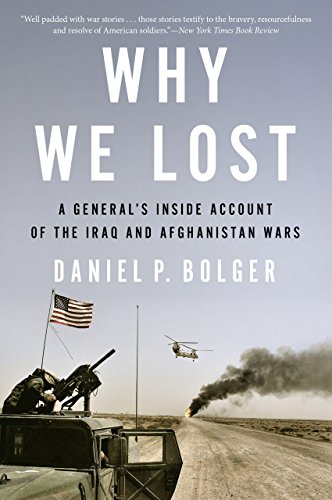
Review – Why We Lost: A General’s Inside Account of the Iraq and Afghanistan Wars

BolgerWhy We Lost: A General’s Inside Account of the Iraq and Afghanistan Wars by Daniel Bolger. Kindle Edition, 565 pages. Published November 11, 2014 by Mariner Books. ASIN: B00KEWAP04

I first published this on Goodreads back in 2014. Someone recently liked it, and the notification caused me to go back and reread it. I’m a little proud of it, so I’m republishing here.
 

LTG Bolger’s review of the wars in Iraq and Afghanistan is disappointing. The title is a bait and switch–promising an examination of the strategic failures of these two wars but offering largely anecdotes of ground-level combat. The stories of the battles are told in greater depth and with more personal observation by those who actually fought them. Bolger commanded large organizations in both Iraq and Afghanistan, and his reputation within the Army combined with this book’s pre-publication media blitz led me to hope for a serious insider discussion of the strategic choices that left us where we are today.

Instead, Bolger offers, to the extent he has a thesis at all, a recapitulation of the Weinberger-Powell doctrine of quick, decisive force with a clear exit stategy. The prescription is appealing to those who experienced the euphoria of the quick, Gulf War “victory,” but it fails to address our continued tendency to land in wars that do not fit neatly into our preconceptions. Bolger even acknowledges that the Gulf War “victory” was a strategic illusion. If so, then his preferred method of warfare failed to achieve its political ends. Bolger, like so many U.S. security pundits, does a great job of identifying the failures in our post-Cold War strategy without offering any real insight into how to do better.

The U.S. today must deal with a frustrating paradox: we are the wealthiest country in the world and expend more resources on defense than the next 14-15 countries combined. All things being equal, we would expect to be superior in whatever military arena we choose to emphasize. This is an extremely effective strategy for deterring conventional threats from rival nation states. However, we cannot expect any adversary to challenge us in our arena of greatest strength. Developing overwhelming capability in conventional military operations will not eliminate opponents; it will drive our opponents to employ asymmetric techniques like flying IEDs and people’s war. The more effective the U.S. military is at conventional warfare, the less likely we are to engage in conventional warfare. Asymmetric means are very costly to our opponents, but a few will still be willing to employ them, particularly when their survival depends upon it.

Despite our preparation and predilection for maneuver warfare, we have ended up confronting asymmetric threats in Vietnam, El Salvador, Lebanon, Iraq, Afghanistan, the Philipines, Bosnia, Kosovo, Somalia, Pakistan, and Yemen. We have been successful where opponents have failed to maximize their strengths against our weaknesses. We have largely failed where our opponents have proven resilient, persistent, and used safe havens. It is all well and good to say we should not engage in nation-building that might lead to counterinsurgency, but our repeated failure to heed that advice requires us to either embed it in our political process or rethink our strategy, doctrine, manning, and equipping.

Modern conventional warfare requires few people and lots of expensive technology–largely due to choices the United States has made about equipping and training our forces. Our conventional forces are roughly equal or even greater in capability to the “special forces” fielded by other nations or by our own in the past. Even the United States cannot maintain both a very large military relative to our population and equip/train it to the levels we have come to expect. Superbly competent infantry have proven invaluable in tactical counterinsurgency just as superbly competent combined arms formations facilitated the rapid overthrow of Iraq. However, the size of our military, particularly the ground forces, has continually limited our reach and therefore our capability to control populations–the essential function of counterinsurgency. Manning a larger ground force at the current levels of training and equipping is prohibitively expensive in the absence of more significant threats than we currently face.

We have two reasonable courses of action going forward, but each involves significant tradeoffs.

We can continue on the current road of high-tech mastery. It will cost us a lot of money and leave us without an effective means to control foreign populations over long periods of time. If we build a national strategy around defending U.S. territory and vital national interests and leaving the rest of the world to muddle through their internal issues, this could work. It will frustrate those who do not differentiate between amounts of military power and types of military power. Recent history indicates we will continue using our superb hammer to drive screws with predictable results.

We can taper off our addiction to high technology. Paradoxically, this may position us better for some future great power war. We could start day one with lots of room for growth and lots of R&D but few sunk costs. Currently, we have enormous sunk costs and had better hope that we bought the right stuff. We have not demonstrated much capability for adapting quickly after the shooting starts. With less money spent on hardware, and I would argue additional tapering on per-person personnel expenses, we could afford a larger military that would be perfectly adequate for defending U.S. territory and vital interests, provide adequate manpower to occupy other countries if necessary, and remain more connected to the civilian population. It would NOT deliver lightning fast and bloodless victories in future Desert Storms. We would pay in casualties to some extent because we would be fielding a military of adequately-equipped citizen soldiers rather than superbly equipped/trained operators. Ask the guys in the Huertgen Forest how that can turn out.

LTG Bolger never really addresses the strategic paradox that put us in this position in the first place. If he is willing to stand up in the public square and loudly oppose future military operations to shape the world to our liking in the absence of existential or at least deadly serious threats, I will stand right there beside him. If not, then perhaps the problem lies not only in our decisions to fight such wars but in the institutional military’s refusal to prepare for them.

Here is one area of praise for the book. Bolger lays squarely on the general officer corps the responsibility for not arguing the case against the Iraq invasion and the Afghan nation-building. He essentially calls his fellow generals moral cowards as a group. Unfortunately, he undermines his own point by praising individually nearly every general he names. Only David Petraeus comes in for anything approaching personal attack. The other generals are all smarter than the press gave them credit for. They all see clearly (even though they see differently). When they fail it’s because they were too trusting or too honest. He conspicuously avoids naming those generals who deserve particular and unmitigated condemnation. Likewise, Bolger finds admiration for some of the less savory characters of the wars. He praises COL Mike Steele and implies that he was treated unfairly. Bolger clearly loathes the rules of engagement imposed in both Iraq and Afghanistan, but he completely fails to address the historical precedents–we tried unfettered strikes and high collateral damage in Vietnam. How did that work out? He acknowledges war crimes by various lower-ranking U.S. service members but either poo-poos them as mostly harmless shenanigans (Abu Ghraib) or emphasizes the tremendous pressures that must have led good-hearted American boys and girls to such lengths (Mahmudiah, Haditha).

Why We Lost essentially argues that we lost because we played. Bolger praises the courageous efforts of American service members and junior to mid-grade leaders. He condemns the general officers as a body (though not individually). In the end, however, he offers no path forward. To the extent he hints at a prescription, it is one that has been tried and found wanting. The U.S. has become the indispensable nation. Too many political blocs within the U.S. are unwilling to simply accept a world that does not conform to our desires. Unless that culture changes in the near future, the military will have to build itself for the world in which it lives–not the world in which it would like to live. Incompetent and purely evil opponents will not line themselves up in countries with U.S. ally neighbors and offer to fight us mano-a-mano. The last guy who did that ended up on the end of a rope.

Starting Over

I’ve blogged intermittently for a few years now. As a serving military officer, I was constrained in what I wrote for publication, even on a blog that nobody was reading. In the past year or so I’ve used the platform primarily as a repository for book reviews, and I’ve use the book reviews primarily to remember what I’ve read and what I thought about it. Middle age does terrible things to the memory.

Now that I’m retired, I feel the urge to speak more freely. This blog will serve at a minimum as a vent for the thoughts clogging up my head–as a way to sort through mental impulses and first impressions and turn them into coherent ideas with proper sourcing. I will need to discipline myself to think ideas through and critique them before they come out.

It will also serve to put first drafts out where others can see and critique them. Consequently, it’s important to note that this blog may contradict itself from time to time, or even frequently. It may include half-assed thoughts that seemed clear and well-supported when I typed them. If I subsequently think better of them, or if readers (aw optimism) convince me I’m mistaken, I will endeavor to publish corrections in the same venue in which I published the original error.


Why does the U.S. have such a staggering record of failure? We don’t.

I came upon this little gem this morning through a link from Doctrine Man (@Doctrine_Man) on Twitter. Harlan Ullman, Arnaud deBorchgrave Distinguished Columnist no less, points out quite accurately that U.S. military adventures since 1945 have not resulted in the sort of Appomattox/rail car at Compiegne/Deck of the Missouri moments of triumph that Americans see as the proper termination of conflict. The tidbits of causality he offers are fair and serious–imperial overreach and hasty intervention in poorly understood conflicts have not served out national interests and have led to embarrassing military debacles with inconclusive or conclusively bad results.

However, the challenge to his thesis is inherent in his murky timeline. He laments a record of failure stretching from Korea to Yemen and compares it unfavorably with our record of winning from the Civil War through the Cold War without noting that these periods overlapped by 49 years! The same administration that allowed “[p]residential inexperience and unachievable aspirations” to drag it into the Korean conflict also initiated the Cold War–unquestionably the decisive conflict of the post-1945 era and unquestionably a U.S. victory. Even Korea, though prosecuted ineptly, was hardly an unqualified failure. Today, South Korea is a prosperous, stable democracy while North Korea is a dysfunctional swamp of palace intrigue, famine, and international mayhem. One can argue that the Korean juice was not worth the squeeze (debatable) or that the U.S. military prolonged the war unnecessarily at the cost of pointless casualties and devastation (undeniable), but it is difficult to wish on the 50+ million South Koreans living in security and prosperity the miseries of North Korean citizenship.

Ullman is also too willing to see previous “successful” conflicts in purely military terms. Certainly the Union militarily defeated the Confederacy and received a clear surrender, but Confederate revanchists spent the next 11 years undermining and resisting the Union regime before fully recovering political control and imposing Jim Crow oppression. Southern legislators largely controlled the U.S. Congress for the century following the war, defeating most attempts to impose upon the recalcitrant southern states the political ends–beyond the formal abolition of slavery–for which the war was fought. Watching southern senators filibuster civil rights bills to death in the 1950s, Clausewitz might have questioned who won the war. The peace ending World War I was so badly botched that it plunged the world into a second and far more destructive conflagration within a generation. Military intervention in the Philippines initiated a drawn out, and politically unpopular counterinsurgency. Invasions of Haiti and Nicaragua hardly generated stable democracies. Even the 1990-91 Gulf War, cited by Ullman as a success, never really ended before sliding into the disastrous 2003 invasion. While it had the trappings of a clear victory, it was really a quagmire without a viable exit strategy.

Those military conflicts that qualify as clear victories pose a second problem–they are hardly among the nation’s proudest moments. The U.S. decisively defeated Mexico in 1848 and seized a vast swath of valuable territory. We fought a long and bloody war from the James River peninsula to Wounded Knee that succeeded in displacing the native people and securing the continent for European settlers, and in 1898 our trumped up war against Spain delivered Puerto Rico and Pacific coaling stations (though also that pesky Philippine insurgency).

Finally, it would be a mistake to view even military performance only through the lens of large-scale conflicts. The vast majority of U.S. military activity over the past 72 years has taken place outside the battlefields of Korea, Vietnam, and Iraq. It has consisted of the naval patrols that ensure open sea lanes, the maintenance of open skies, and the security guaranteed by the deterrence by U.S. service members stationed in Europe and Asia.

There is much to lament in the U.S. military record from 1945 to the present, but the U.S. strategic record is not nearly so dismal. During that period, the United States established and sustained the institutions that have maintained global commerce and a substantial period of great power peace. We faced down the Soviets over Cuban-based missiles and emerged without destroying the world. We generated unprecedented security and prosperity for our own people and played a major role in securing the same for our close allies in Europe and Asia. Viewed from a greater distance, U.S. military failures appear less as a series of disasters and more as unfortunate and embarrassing sideshows. That does not absolve the architects of failure, nor does it lessen the pain of those who paid the price for those failures. We should be ruthlessly honest with ourselves about our military shortcomings and substantially improve our decision-making for engaging in military adventures. We should not equate those military failures with strategic failure and sacrifice what has been successful in an attempt to improve what is, after all, only one element of our strategic toolbox.


Review – The Sling and the Stone: On War in the 21st Century

HammesThe Sling and the Stone: On War in the 21st Century
by Colonel Thomas X. Hammes, USMC
Paperback, 321 pages. Published 2006 by Zenith Press. ISBN: 978-0-7603-2407-3

Written as the Iraq war was careening off a cliff and published in 2006, just before President Bush’s decision to “surge” in Iraq, The Sling and the Stone attempts to define the next generation of warfare. Hammes subscribes to the theory of Billy Lind, Gary Wilson, et. al. that there have been four generations of modern war, each reflecting and conforming to the society that engaged in it. First generation warfare relied on line and column to mass firepower at the crucial point on a relatively confined battlefield. The second generation employed rifled, breach loading weapons, barbed wire, and other technological advancements of industrial age to culminate in the static trench slaughter of World War I. Faced with the carnage of the first war, the Germans introduced the third generation, maneuver warfare, in 1939.

Fourth generation warfare is the weapon of the weak against the powerful. In Hammes’s telling, Mao “started this form of war,” (a dubious assertion) and subsequent practitioners have modified and improved it, making use of ever-changing technology, public opinion, and the fecklessness of the superpowers that insist on fighting the enemy the desire rather than the enemy that actually challenges them.

Hammes is particularly incensed by the Pentagon’s Joint Vision 2020 and the obsession with “cyber war.” His dismissal of cyber warfare has not worn well with time, in large part because the cyber war he describes is not the cyber war that has actually evolved in the last decade. Hammes is justly critical of Pentagon planners who insist on facing a near-peer competitor armed with high-tech weaponry and contesting territory openly. Such competitors justify massive defense budgets focused on high-end gadgetry produced by giant defense contractors. They provide jobs in congressional districts and require massive bureaucracies full of patronage appointees. Unfortunately, the United States is so good at and prepared for fighting such wars that no enemy it their right mind would dare to face us on our own terms.

Since Hammes published his book, the Russians have engaged in small wars in both Georgia and Ukraine. Russian capabilities have surprised many casual observers–after allowing their military to largely collapse in the 1990s, they have rebounded with a professional, well-equipped force prepared to fight effectively with massed fires and sophisticated battlefield coordination. They are using unmanned aerial systems effectively with long-range rocket artillery to strike deep in enemy territory. But, the Russians cannot project power far beyond their borders. The Syrian war has demonstrated both their capabilities and their limitations. Their single aircraft carrier is a joke, requiring them to maintain a secure airfield within range of the battlefield if they wish to bring to bear their air force. They were able to launch a few cruise missiles, but they did not achieve the sort of effects that the U.S. military considers routine. They did not even attempt to deploy large ground forces.

Meanwhile, however, the Russians have deployed a sophisticated and deniable cyber capability that causes the western world consternation. Hammes largely dismissed the cyber threat that has actually emerged while equating cyber war to the much touted “revolution in military affairs” enabled by sophisticated command, control, communications, intelligence, surveillance, and reconnaissance. Hammes argues that the U.S. overestimates the utility of its C4ISR dominance while underestimating the resiliency and ingenuity of its likely adversaries. Here he is undeniably correct. Hammes failed to see the potential for cyber warfare to emerge as a key tool in the asymmetric warfare toolkit–cheap, concealable, portable, and scalable.

Overall, Hammes’s book fits into the library of fine studies of insurgency, counterinsurgency, and terrorism published since 2001. It is not revolutionary, but it does provide solid case studies of modern asymmetric warfare and clearly articulates why the U.S. is likely to continue facing such threats and unlikely to face the peer competitor for which it endlessly prepares.